Yamaha R7: New Sport Bike
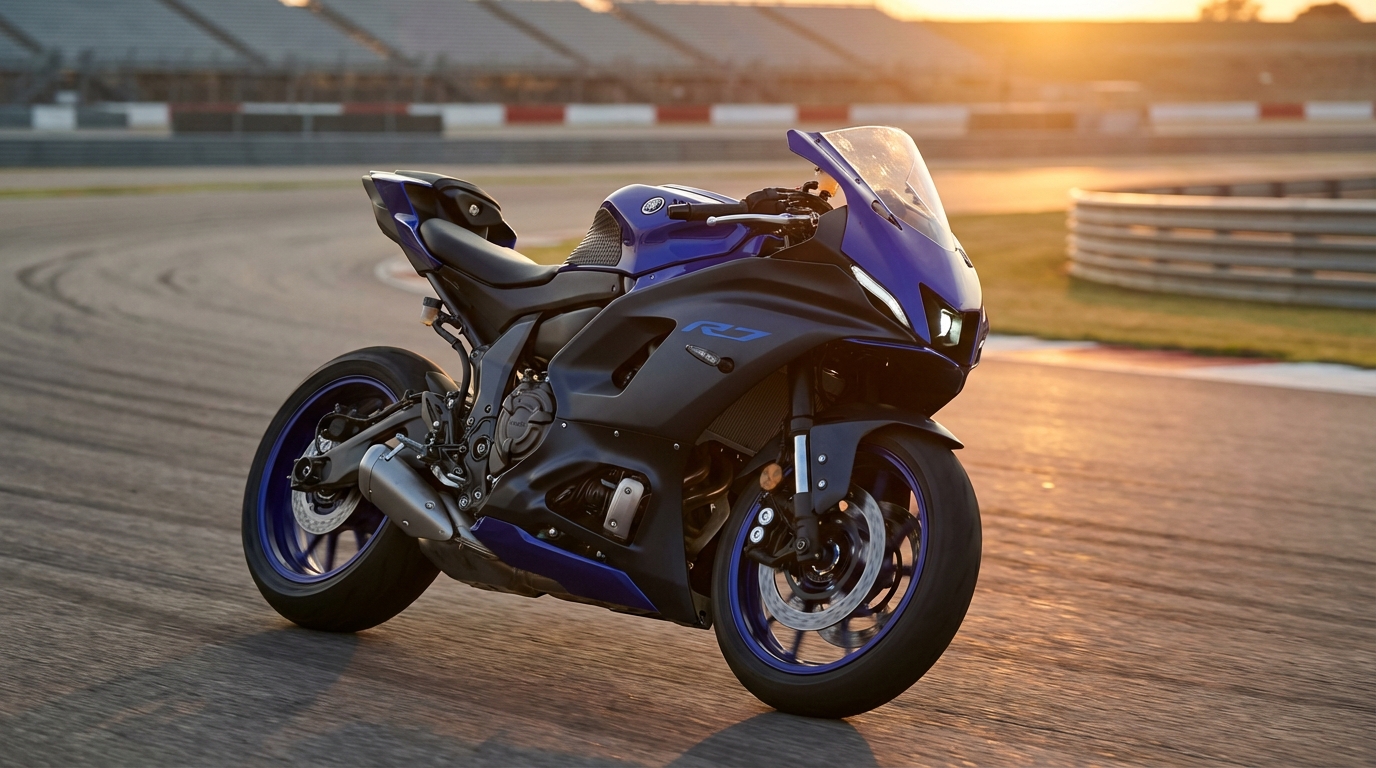
In the mid-displacement sportbike segment, the Yamaha R7 has established itself as an undisputed benchmark. For 2026, Yamaha has thoroughly redesigned its machine, incorporating cutting-edge technologies and mechanical improvements that enhance its agility and performance. This new Yamaha R7 perfectly combines aerodynamic design and sophisticated electronics, making it a formidable ally both on the road and on the track. Its controlled power of 73.4 horsepower, redesigned chassis, and advanced connectivity offer a perfect balance between riding pleasure and safety. Throughout the following sections, this overview will reveal all the new features of this motorcycle, which thrills the sporting community thanks to its “R-Series” DNA, Yamaha’s unique signature.
Constantly evolving, the R7 sits at the heart of the Japanese manufacturer’s sportbike range, offering an accessible alternative without compromise. This sportbike, accessible to A2 license holders, is particularly appealing thanks to its 689cc twin-cylinder engine, redesigned to meet Euro 5+ standards, and its numerous rider assistance systems directly inspired by the prestigious Yamaha R1. Not to mention its redesigned ergonomics, which combine comfort and a dynamic riding position, making every ride more exhilarating while minimizing fatigue. This 2026 model perfectly illustrates the fusion of tradition and innovation in the world of sportbikes.
Advanced onboard technology and electronics: the 2026 Yamaha R7 raises the bar for sporting performance
At the heart of the improvements that propel the 2026 Yamaha R7 to new technological heights is its new 6-axis Inertial Measurement Unit (IMU), inherited directly from the R1. This IMU controls a full suite of electronic rider aids that enhance confidence in every corner and during acceleration and braking. These systems include lean-sensitive traction control (TCS), slide control (Slide Control System, SCS), engine brake management (EBM), and rear wheel slip control during hard deceleration via the Back Slip Regulator (BSR).
This suite of electronic rider aids is complemented by an optimized launch control system, ideal for track starts. The rear ABS can be deactivated for purist riders and track sessions, offering rare flexibility for a motorcycle in this category. The Yamaha Ride Control (YRC) system offers several riding modes – SPORT, STREET, and RAIN – plus two customizable modes that the rider can configure via the MyRide app. This level of electronic customization was previously reserved for high-end models, demonstrating the R7’s move upmarket.
The third generation of the Quickshifter now allows gear changes without using the clutch, both during acceleration and deceleration, ensuring smooth and efficient riding. This gearbox has been improved with a higher gear tooth count and modified gear angles, optimizing the smoothness and precision of gear changes.
| Electronic functionality | Description |
|---|---|
| 6-axis IMU | Dynamic motorcycle management based on orientation and forces at play |
| Traction control system (TCS) | Adjusts the power according to the angle of inclination to prevent loss of traction |
| Slide Control System (SCS) | Manages lateral slippage for safer handling |
| Engine Brake Management (EBM) | Optimizes engine deceleration for improved stability |
| Quickshifter 3rd gen. | Clutchless gear shifting in both directions |
These electronic equipment innovations make the 2026 Yamaha R7 a motorcycle capable of delivering high performance with enhanced control, positioning it at the forefront of the mid-displacement sportbike segment. This technical sophistication clearly raises the bar for the segment, appealing to both new and experienced riders.
Chassis, suspension and handling: the perfect balance for precise and agile driving
The new Yamaha R7 features a thoroughly redesigned chassis that combines lightness, increased rigidity, and optimal feedback. Every element has been meticulously studied to offer an ideal compromise between high-speed stability and responsiveness in tight corners. At the heart of these improvements, a central steel reinforcement provides greater strength, while the 41mm inverted fork has been lightened by incorporating aluminum piston rods, thus reducing its weight by 350 grams.
One of the major changes concerns the new SpinForged lightweight alloy wheels, developed in-house by Yamaha. These forged wheels reduce the moment of inertia and offer improved handling, allowing for surprisingly agile transitions between lines. This advantage is further enhanced by the standard-fit Bridgestone Battlax Hypersport S23 tires, which provide exceptional grip in all conditions.
To further refine its handling, the swingarm geometry and the headlight fairing have been modified to prioritize precise steering with maximum stability, even when entering corners at high speed. This chassis upgrade is complemented by an adjustable monoshock, allowing riders to adapt the suspension stiffness to suit different road conditions or rider preferences. The suspension thus provides optimal absorption while maintaining the characteristic dynamism of Yamaha sport bikes.
The 2026 Yamaha R7 also benefits from improved ergonomics, with a lower seat height of 830 mm, making the motorcycle easier to handle for a wide range of riders, including those of smaller stature. The redesigned handlebars and streamlined fuel tank offer greater freedom and ease of movement, without compromising a sporty yet comfortable riding position. Footpegs borrowed from the R1 enhance stability when cornering aggressively.
- Lightweight 41mm aluminum inverted fork
- Lighter SpinForged rims for improved responsiveness
- Bridgestone Battlax Hypersport S23 tires as standard
- Adjustable monoshock absorber depending on terrain and style
- Lowered seat height for better control
- Redesigned ergonomics for increased comfort during sporty driving
These mechanical and ergonomic adjustments make the Yamaha R7 a model that sacrifices neither performance nor riding pleasure, capable of nimbly weaving through urban environments as well as shining on the track.
Design and aesthetics: the “R-Series” DNA sublimated in the new Yamaha R7
The design of the 2026 Yamaha R7 demonstrates a clear desire to reinforce its status as a modern sport bike while respecting the iconic style of the “R-Series” family. The sleek silhouette has been refined thanks to a new, more aerodynamic fairing, the characteristic “M”-shaped front air intake, and a redesigned front spoiler that better channels airflow to the radiator. This optimized aerodynamics not only helps reduce drag but also improves stability at high speeds.
The turn signals, now integrated into the mirrors, streamline the lines while ensuring better visibility. The headlight features a new lens, the focal point of a decidedly aggressive front end. This combination modernizes the overall look and gives the motorcycle a sharp, distinctive character.
This year, the Yamaha R7 offers a special edition in Yamaha’s 70th-anniversary colors, reminiscent of the legendary 1999 R7 with its striking white and red livery. This celebration of heritage adds a touch of exclusivity to this already highly sought-after motorcycle. Of course, the classic Midnight Black and Icon Performance color schemes remain available to satisfy every aesthetic preference.
This attention to design is complemented by a compact 5-inch color TFT instrument panel, clearly displaying riding information with several visual themes, including a dedicated track mode for tracking lap times. The interface allows all essential controls to remain on the handlebars, promoting intuitive riding.
Engine performance and feel: an optimal balance for speed and control
Powered by the 689cc CP2 parallel-twin engine, the Yamaha R7 delivers controlled power of 73.4 horsepower at 9000 rpm, with a torque of 67 Nm at 7750 rpm. This engine architecture, highly regarded for its linear and responsive character, has been modernized to meet Euro 5+ requirements while maintaining its dynamic efficiency.
Thanks to electronic fuel injection with ride-by-wire throttle, the response is precise and progressive. The expert engine management system integrated into the IMU allows for perfect modulation of power delivery, enhancing the feeling of control even in challenging riding conditions. The availability of a 47.5 hp restriction makes this sport bike accessible to A2 license holders without compromising the model’s versatility.
On the road, the R7 stands out for its ability to accelerate briskly while maintaining reassuring stability thanks to its onboard electronics. Its generous torque facilitates acceleration, particularly appreciated when exiting corners. On the track, the engine-chassis combination allows for sharp lines at high speed, while ensuring agility that enhances the intensity of the riding experience.
| Characteristic | Details |
|---|---|
| Engine | CP2 689cc Twin Cylinder |
| Maximum power | 73.4 hp at 9000 rpm |
| Couple | 67 Nm at 7750 rpm |
| A2 Speed Limiter | 47.5 hp |
| Transmission | 3rd generation quickshifter |
| Injection | Ride-by-wire accelerator |
The 2026 Yamaha R7 is aimed at those who want to experience speed and pure thrills in an accessible format, without compromising on the quality of its onboard technology. This motorcycle invites an intense sporting experience while minimizing risks thanks to its advanced electronics.
Connectivity, accessories and options for a personalized sports experience
Equipped with a fully connected 5-inch TFT dashboard, the 2026 Yamaha R7 allows for seamless interaction with modern technology via the MyRide app. The rider can access GPS navigation, customize riding modes, view notifications, and track performance in real time.
The Y-TRAC Rev app, already popular on the R9, offers in-depth analysis of data collected during riding, including lean angle, throttle management, and traction control. When paired with GPS devices like the Garmin GLO2, it allows riders to compare lap times and optimize their performance on the track.
In terms of options, Yamaha offers a complete range of GYTR accessories tailored to the R7. This collection includes track-specific parts: racing exhaust, adjustable levers, enhanced protection, and lightweight components. These accessories enhance the motorcycle’s appearance while improving its performance and customization.
- MyRide app for managing modes and smartphone connectivity
- Y-TRAC Rev data analysis for advanced sports tracking
- GYTR accessories specially designed for the R7
- Aesthetic customization with 70th anniversary colors
- Multi-profile driving modes adapted to all uses
This connected and modular approach reinforces the R7’s sporty character while offering modern and practical tools to improve control and riding pleasure. Versatility is also achieved through technology, with a constant focus on performance.
To gain a deeper understanding of the technologies integrated into the R7, feel free to consult the full article on the advanced technologies of the Yamaha R seriesFor fans of the brand and those looking for an accessible sport bike, the motorcycle buying guide A2 Yamaha license also offers some interesting leads.
What are the main new electronic features of the 2026 Yamaha R7?
The new Yamaha R7 incorporates a 6-axis IMU and numerous rider assistance systems such as tilt-sensitive traction control, slide control, engine brake management, a third-generation bidirectional quickshifter and a launch control system.
Is the 2026 Yamaha R7 suitable for beginners and A2 license holders?
Yes, the R7 can be restricted to 47.5 horsepower for A2 license holders, offering a high-performance and accessible motorcycle that combines manageable power and rider assistance technologies.
What are the advantages of the new chassis and suspension on handling?
The chassis has been stiffened and lightened using steel and aluminum components, while the forged wheels improve responsiveness. The inverted fork and shock absorber are adjustable, providing greater precision and stability in all conditions.
How does connectivity improve the driving experience on the R7?
The TFT dashboard, connected via the MyRide app, allows you to personalize riding modes, track performance, and navigate easily. The Y-TRAC Rev app provides detailed analysis of riding data to help you improve on the track.