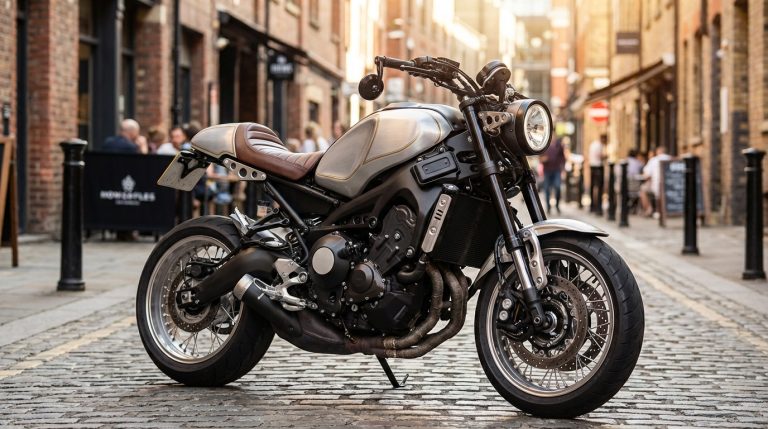
Yamaha XSR700: Neo-Retro Complete Test

The Yamaha XSR700 perfectly embodies the neo-retro spirit that appeals to an ever-growing audience seeking a balance between tradition and modernity. Since its launch, this motorcycle has established itself as a must-have in the vintage roadster category, offering 1970s-inspired aesthetics while benefiting from the performance and reliability of a contemporary machine. Based on the robust MT-07 platform, the XSR700 stands out with its refined and minimalist design, giving it a unique character. A comprehensive test of this motorcycle reveals how Yamaha has successfully met the challenge of blending history and technology, offering comfort, versatility, and riding pleasure in all conditions, whether on the open road or in the city.
The XSR700’s potential is evident from the very first kilometers. Its 689cc CP2 twin-cylinder engine delivers ideal power for everyday use without offering excessive thrills that could overwhelm novice riders. Far from being overly aggressive, the engine shines with its smoothness and generous torque, allowing for easy acceleration and playful handling in corners. Its vintage silhouette is accentuated by refined details, such as the small tank adorned with colored stripes, the mesh side panels, and an exposed frame that evokes classic motorcycles while boasting a modern and robust design.
This comprehensive test will delve into several fundamental aspects of the Yamaha XSR700, from its signature design and reliable mechanics to its chassis and accessible electronic equipment. Each feature will be examined in detail to better understand what accounts for the enduring success of this neo-retro motorcycle in a rapidly changing market. Vintage motorcycle enthusiasts and beginners alike will find in this machine a true balance between style and practicality, allowing them to ride with elegance and modern flair.
Neo-retro Design: The Art of a Timeless Style Revisited
The design of the Yamaha XSR700 is undoubtedly one of the first things that catches the eye and instantly captivates. The Japanese brand has managed to capture the essence of vintage style while incorporating a certain freshness that avoids the trap of stagnant nostalgia. The motorcycle’s overall lines clearly evoke classic 1970s roadsters, with its elongated tank atop an exposed tubular frame and a clean, one-piece seat. The choice of colors, particularly the two distinctive contrasting stripes on the tank, recalls racing motorcycles of yesteryear while giving the whole bike a unique character.
The new round LED lights, both front and rear, provide a modern lighting signature while maintaining the retro look. The headlight integrates seamlessly, with a refined design and discreet presentation, while the more daring taillight may be divisive: its multiple small LEDs scattered around the seat add a high-tech touch, even if they deviate slightly from the traditional style. This design choice illustrates Yamaha’s desire to shake things up a bit to appeal to a new generation that appreciates the contrast between past and present.
The dashboard is a feat of functional minimalism. It combines a classic circular tachometer with a bright LCD screen displaying all the essential information: speed, gear position, average fuel consumption, clock, fuel gauge, and various warning lights. This instrumentation, with its understated design, is pleasing, but its small size and slightly offset positioning on the left side raise some questions. On the other hand, the simplified layout of the handlebar controls makes them easy to use, even if they become a little tricky to operate with thick gloves—a point to consider for riders in cold weather.
Complementing this clean design, the small mesh air scoops on the sides and the integrated short silencer contribute to a harmonious silhouette free of unnecessary embellishment. However, one notable absence for some enthusiasts will be the lack of spoked wheels and typical scrambler protection, which could have enhanced its vintage appeal. Nevertheless, this understated approach allows it to stand out with a unique identity that blends elegance and simplicity.
Engine and Performance: A perfect balance between power and handling
The Yamaha XSR700 is powered by the renowned 689cc CP2 parallel-twin engine, a proven engine that is among the most popular in its class. It delivers a power output of 73.4 horsepower at 8750 rpmThis figure may seem modest by today’s standards, but combined with a weight of less than 190 kg, it translates into a universally enjoyable and accessible riding experience. This judicious combination makes the motorcycle particularly maneuverable, ready to weave through city traffic as well as lean nimbly over winding roads.
With a maximum torque of 67 Nm at 6500 rpmIt allows for a smooth and seamless ride, ideal for effortlessly taking corners. This engine doesn’t aim to impress with sudden acceleration, but rather focuses on a progressive and predictable response, making it a reassuring ride, especially for beginner or intermediate riders. This characteristic also allows for easy overtaking on highways, without compromising comfort or fuel economy.
Average consumption is very reasonable, around 4.5 liters per 100 kmdemonstrating impressive energy efficiency, which is well-suited to the average 14-liter fuel tank capacity. This modest range encourages frequent stops but perfectly matches the touring profile sought by users of this type of roadster.
The chassis benefits from a welcome update with new 298 mm front brake discs, paired with four-piston calipers, and a 245 mm rear disc. The braking, assisted by ABS, is precise and modulated, boosting confidence even during spirited riding. This mechanical safety is essential for exploiting the motorcycle’s full potential without compromise.
As for the suspension, the 41mm front fork is fixed with no adjustments, prioritizing comfort and simplicity, while the rear monoshock offers preload adjustment. This minimalist setup ensures a balanced ride and consistent agility regardless of the load, especially when carrying a passenger. A real plus for those who want to switch between leisurely rides and more spirited adventures.
Ergonomics and Comfort: A motorcycle designed for leisurely rides and everyday use
The ergonomics of the Yamaha XSR700 have been designed to offer a natural and accessible riding position, suitable for a wide range of riders. Its low seat, positioned at a moderate height, makes it easy to handle for beginners or those of shorter stature. This height allows for complete control of the vehicle when stationary, enhancing confidence and safety on a daily basis.
The wide, slightly raised handlebars encourage an upright riding position that protects the back and reduces fatigue on long journeys. This position also prevents wrist strain, a considerable advantage on extended trips or in urban environments where smooth motorcycle handling is essential.
Comfort is enhanced by suspension that effectively filters out road imperfections, even on uneven surfaces. The adjustable rear monoshock allows preload to be adapted to the load, a well-thought-out feature for those riding two-up or carrying light loads. Compared to the simplicity of the front fork, this system ensures good stability and natural dynamic balance.
It’s important to emphasize that the lack of wind protection reinforces the idea that this motorcycle is primarily designed for leisurely riding, rather than intensive highway use. However, the optional small windscreen can mitigate this for riders seeking a compromise between aesthetics and protection.
Finally, the machine’s low weight, barely over 180 kg, is combined with remarkable ease of handling, allowing you to navigate narrow streets and parking spaces with effortless ease. The motorcycle thus becomes a perfect city companion, but also the ideal vehicle for weekend getaways where lightness and agility take precedence over the pursuit of speed.
Comparison and positioning against neo-retro competitors
In the neo-retro motorcycle market, the Yamaha XSR700 faces stiff competition, notably from models like the Kawasaki Z650RS, the Triumph Street Twin, and the Ducati Scrambler. Each of these motorcycles takes a different approach to vintage style and performance, but all strive for a balance between old-school charm and contemporary technology.
The XSR700 stands out for its versatility and competitive price. Priced at €8,299 For the base version, it’s positioned roughly at the same level as the MT-07, with which it shares its mechanics. Special editions like the Legacy or the XTribute, offering more pronounced stylistic and technical options, come with higher prices, respectively. €9,699 And €9,299.
This competitive price range offers excellent value for money, especially considering the quality of the components and the riding experience. In comparison, the Kawasaki Z650RS also offers appealing vintage styling, albeit with a slightly less powerful engine, while the Triumph Street Twin focuses more on refinement and overall comfort, at a roughly similar price. The Ducati Scrambler, on the other hand, targets a market willing to invest more for a decidedly bolder style and a premium brand.
| Model | Engine | Power | Weight | Price (€) | Main style |
|---|---|---|---|---|---|
| Yamaha XSR700 | 690cc Twin Cylinder | 73.4 ch | 188 kg | 8,299 | Neo-Retro |
| Kawasaki Z650RS | 649cc Twin Cylinder | 68 hp | 187 kg | 7.999 | Classic retro |
| Triumph Street Twin | 900cc twin-cylinder | 65 hp | 216 kg | 8,500 | Neoclassical |
| Ducati Scrambler Icon | 803cc Twin Cylinder | 73 hp | 186 kg | 9,490 | Neo-retro scrambler |
Ultimately, the Yamaha XSR700 emerges as an excellent choice for motorcyclists seeking a balance between assertive retro style, dynamic performance, and a controlled budget. The deciding factor often hinges on the design, but also on ease of daily use, an area in which this neo-retro motorcycle undeniably shines.
Technologies, equipment and riding sensations
The Yamaha XSR700 doesn’t try to impress with a deluge of electronics or sophisticated rider aids. The essentials are all there, with ABS that’s appreciated in all conditions and a functional design conceived not to disrupt the vintage riding experience. This simplicity is often cited as a key selling point for those who want to enjoy raw, uncomplicated mechanics.
The instrument panel offers a clear display, grouping essential data: tachometer, speedometer, fuel gauge, average fuel consumption, clock, and gear indicator. Its backlit LCD screen with a black background makes it easy to read even in bright sunlight, thus enhancing active safety by minimizing distractions. However, the screen’s modest size requires careful attention when navigating the menus, especially when wearing bulky gloves.
The handlebars offer an intuitive layout with perfectly positioned controls: turn signals, headlight flasher, horn, and menu navigation on the left, with the ignition and hazard lights on the right. The ride is smooth, thanks to exemplary handling that encourages you to fully exploit the engine’s potential in a light and playful atmosphere.
The quality of the tubular frame and the suspension tuning contribute significantly to its balanced handling, where comfort and efficiency are perfectly combined. The XSR700 is ideal for Sunday rides, whether solo or with a passenger, offering immediate ease of use that reduces the learning curve. This motorcycle is also recommended for those who want a ride that is both stylish and practical for everyday use.
- Modernized retro design with meticulously crafted details
- Efficient engine and widely accessible, ensuring driving comfort
- Balanced chassis with efficient ABS braking
- Thoughtful ergonomics for long rides and quick handling
- Competitive price in the neo-retro segment
What engine does the Yamaha XSR700 have?
The Yamaha XSR700 is equipped with the 689cc CP2 parallel twin engine, delivering 73.4 horsepower at 8750 rpm, offering an excellent compromise between power and handling.
What is the range offered by the XSR700’s fuel tank?
With a 14-litre tank and an average consumption of around 4.5 litres per 100 km, the XSR700 offers an average range suitable for rides and daily commutes.
Is the Yamaha XSR700 suitable for beginners?
Yes, its accessible riding position, light weight and smooth engine make it an excellent motorcycle for novice riders while remaining enjoyable for more experienced riders.
What are the major strengths of the chassis?
The tubular frame, combined with 298mm front disc brakes and an adjustable monoshock, guarantees a perfect balance between comfort and dynamism.
How does the XSR700 compare to its competitors?
The XSR700 stands out for its excellent value for money and its assertive neo-retro style, competing with the Kawasaki Z650RS, the Triumph Street Twin and the Ducati Scrambler while remaining accessible.