Yamaha Crossplane: CP3 Engine Explained
Yamaha’s CP3 engine, an inline three-cylinder with exceptional performance, has captivated many sportbike enthusiasts since its unveiling in 2014. With its innovative “Crossplane” design, this nearly 900cc engine revolutionized the triple segment by offering a unique balance between generous torque and responsiveness at high revs. Models like the MT-09, Tracer 9, and XSR900 have significantly contributed to its renown, establishing the CP3 as a benchmark in the modern engine landscape. Yamaha technology continues to evolve, improving smoothness, handling, and riding pleasure, in a context where the pursuit of performance also goes hand in hand with control and versatility.
Combining the Japanese brand’s technical heritage with an engine architecture designed to maximize torque while maintaining a unique sound, the CP3 is not just an engine, but a true signature. In 2026, it continues to power several successful models, securing Yamaha’s place among the most innovative manufacturers. The engine’s success stems as much from its mechanical design as from its ability to adapt to different motorcycle families, from sporty roadsters to adventure tourers, including retro and even three-wheelers. Therefore, understanding the CP3 engine’s operation, its timing, its Crossplane technology, and its evolution remains essential to grasping why it is so captivating.
Architecture and operation of the CP3 engine: Crossplane technology in detail
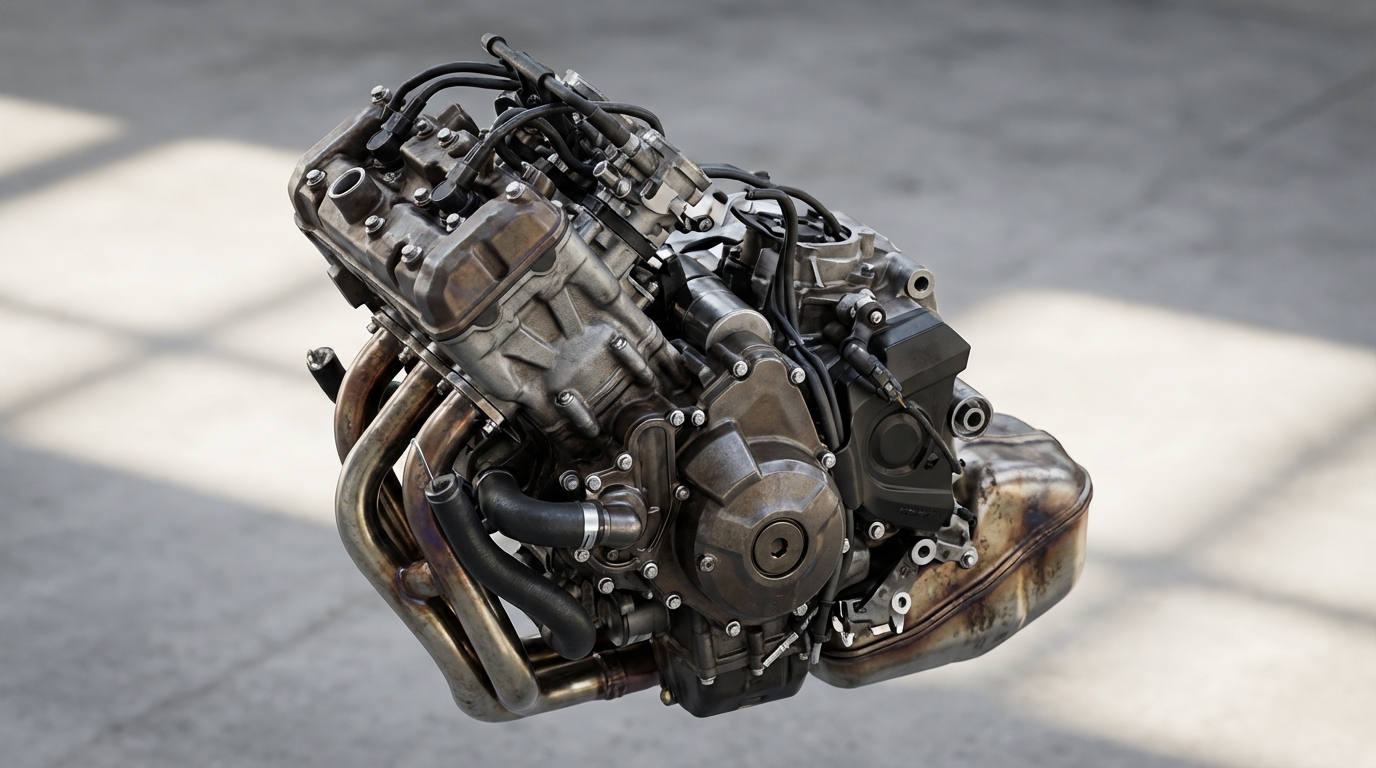
Yamaha’s CP3 engine is based on an inline three-cylinder architecture, characterized by a classic 120-degree firing order between each cylinder. Contrary to what the term “Crossplane” might initially suggest, this firing order is not a typical crossplane design like those found on Yamaha’s four-cylinder engines, but rather a marketing term that actually highlights a key technical feature: even power delivery and optimal balance of internal forces.
This engine features a double overhead camshaft (DOHC) design with liquid cooling, ensuring excellent thermal management while allowing it to reach high engine speeds, approaching 11,000 rpm on the first generation. Its architecture guarantees smooth torque delivery across a wide range, improving both maneuverability in urban conditions and the ability to harness power on the track.
The CP3’s key feature lies in its ability to reduce vibrations thanks to meticulous balancing. The engine compensates for “rocking torque,” the oscillating movement caused by the asymmetrical piston arrangement, via a gear-driven balance shaft. This Yamaha technology significantly reduces rider fatigue and increases mechanical longevity by eliminating unpleasant vibrations, while preserving the distinctive, warm, and dynamic sound characteristic of three-cylinder engines.
Its carefully calculated bore-to-stroke ratio, with a moderate bore of around 78 mm, contrasts with many large-cylinder sport engines. This design allows the CP3 to deliver rich mid-range torque, better suited to road use than a burst of power at very high revs. This is a sound technical choice, as it prioritizes versatility across virtually all the models it’s designed for.
To better understand, here is a list of the key points of the CP3 architecture:
- Cylinder timing at 120° for a regular and homogeneous firing order.
- Balance shaft to compensate for rocking torque and minimize vibrations.
- DOHC distribution with liquid cooling.
- Optimized bore/stroke ratio to prioritize torque at low and medium engine speeds.
- Specific sound thanks to this unique configuration.
This architecture partly explains why the CP3 is so popular: a blend of mechanical excellence that is smooth, responsive and versatile.
History and evolution of the CP3 engine: from the XS750 to the modern MT-09
The genesis of the CP3 engine is rooted in the history of Yamaha three-cylinder motorcycles, beginning with the XS750 in the 1970s. This iconic motorcycle already introduced the signature 120-degree crankshaft, a rarity at the time compared to traditional twins or four-cylinder engines. The XS750 and its successor, the XS850, made a lasting impression with their mechanics, characterized by linear and smooth torque delivery, although the technology of the era did not yet allow for the same refined vibration characteristics as modern engines.
These initial tests demonstrated that Yamaha knew how to leverage a 3-cylinder architecture to offer a different experience, smoother than twins and less complex than heavy four-cylinders. After several decades primarily focusing on twin and quad engines for their lineup, Yamaha returned to this dynamic by placing the triple at the heart of the sport roadster segment with the 2014 launch of the MT-09 (initially the FZ-09 in the United States).
This inaugural generation of the CP3 engine aimed to provide a compact, lightweight engine capable of strong dynamic performance, notably with a power output of approximately 115 horsepower. Subsequent adjustments were made to smooth out the fuel injection and improve control during hard acceleration. The technology was further enhanced by modern electronics, including multiple driving modes and traction control.
In 2021, Yamaha significantly revised the CP3 engine’s architecture, increasing its displacement to 890cc and refining the internal components—pistons, connecting rods, and camshaft—to improve torque, particularly at lower RPMs. This revision also reduced the engine’s weight by approximately 1.7 kg, making the motorcycle lighter overall. The optimization resulted in improved throttle response and smoother power delivery, confirming the versatility of an engine suited to various riding styles.
The table below summarizes the major technical evolution of the CP3 between the two main generations:
| Characteristic | First Generation (2014-2021) | Second Generation (2021+) |
|---|---|---|
| Displacement | 847 cm³ | 890 cm³ |
| Maximum power | 115 hp @ 10,000 rpm | 117 hp @ 10,000 rpm |
| Maximum torque | 87.5 Nm @ 8,500 rpm | 93 Nm @ 7,000 rpm |
| Maximum RPM | 11,300 rpm | 10,600 rpm |
| Engine weight | – | -1.7 kg |
The importance of electronic and mechanical adjustments
One of the keys to the CP3’s success also lies in the synergy between its engine architecture and onboard electronics. Yamaha has progressively introduced electronic management that adapts the fuel injection mapping, throttle control, and traction control in real time, thus optimizing performance and safety.
These software programs adjust low-end torque to reduce jerkiness and refine handling, while maintaining the necessary high-end power. Mechanical improvements have also played a role in this evolution, with firmer suspension on certain models like the MT-09 SP, correcting the overly playful behavior of the first generation.
Yamaha models equipped with the CP3 engine: versatility and commercial success
Since its launch, the CP3 engine has powered a wide range of Yamaha motorcycles with very different characters, illustrating the absolute versatility of this architecture. The first to benefit from this engine was the roadster MT-09, a light and responsive motorcycle, which has brought a new dynamic to the mid-displacement sport motorcycle segment, appealing to both novices and experienced riders.
Another important chapter is being written with the Trace 9, a sporty tourer that has become a must-have among versatile sports cars. Equipped with the same CP3 engine, it combines comfort, road holding, and ample torque for long journeys or winding roads. Its success is largely due to the balance between available power and dynamic stability. You can learn more about this model in the complete guide dedicated to the Tracer 900 sport touring motorcycle.
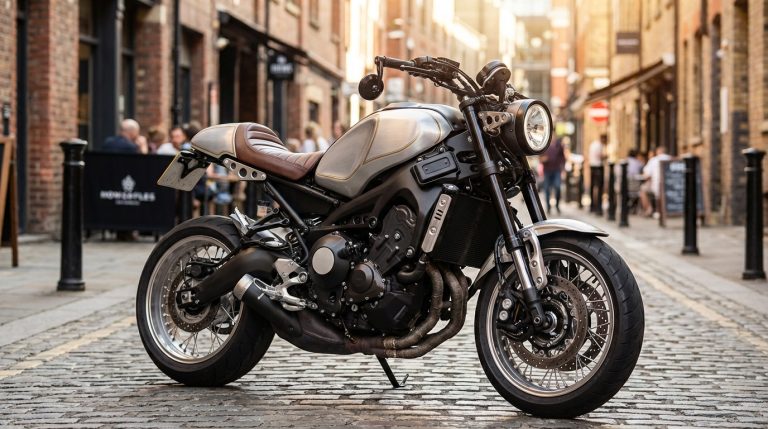
Finally, the XSR900 This adds a touch of nostalgia and retro elegance to this modern engine. Far from being a simple return to its roots, this model is a successful synthesis of vintage style and contemporary technology, perfectly embodied by the integration of the CP3 engine. Appreciated for its handling and clean lines, it is a notable benchmark in the neo-retro motorcycle category. Find more information about this motorcycle in the dedicated article. Yamaha XSR900 retro-sport.
Moreover, Yamaha has even innovated with a new version of the CP3 in the Niken, a three-wheeled model that uses the engine and dynamics of the MT-09 to offer an original riding experience, highlighting another aspect of the CP3’s versatility.
The advantages of the CP3 engine in various contexts
The engine’s ability to deliver progressive torque with excellent responsiveness across the rev range makes it perfectly suited to both everyday and sporty needs:
- Maneuverability in the city: The engine torque available from low revs allows for smooth start-up and acceleration.
- Sports performance: In tight corners or on the track, the high pace and fluidity remain constant.
- Versatility of use: Yamaha’s CP3 technology adapts to both relaxed riding and demanding piloting.
- Recognized reliability: Stable mechanical simplicity guarantees a longevity appreciated by owners.
What future for the CP3 engine in the face of environmental and technological challenges?
Despite its success, the CP3 engine faces major challenges to remain relevant in a world of rapidly evolving environmental standards and technological advancements. Increasingly stringent CO2 emission restrictions are forcing engineers to rethink or enhance emissions control systems and engine management to reduce fuel consumption and pollution.
While adopting even more precise injection systems and higher-performance catalytic converters, Yamaha is also exploring the possibility of hybridization or alternative powertrains in the longer term. However, the very nature of the CP3, with its abundance of torque and exhilarating performance, suggests that its purely combustion-engine version may be destined to evolve.
Sport models like the YZF-R9, recently launched to bridge the gap between the heritage of the YZF-R1 and the older R6, illustrate this shift. The CP3 engine is fine-tuned to meet the demands of the sportbike while still delivering an authentic sportbike experience. However, the focus on environmental sustainability is already leading to a gradual reassessment:
- Adapting engine architectures to limit fuel consumption.
- Increased integration of electronics to optimize performance while reducing emissions.
- Research into hybrid or electric alternatives compatible with the spirit of the sport motorcycle.
However, today and in the future, the CP3 engine continues to represent a rare balance between power, torque, and driving pleasure. An engine that, at present, remains an essential icon for discerning enthusiasts.
What is Crossplane technology in the CP3 engine?
Crossplane technology in the CP3 engine refers to the perfect balance of internal forces achieved through a 120° cylinder timing, combined with a balance shaft that cancels out torque rocking, delivering smooth power and less vibration.
Which Yamaha models are equipped with the CP3 engine?
The CP3 engine equips several Yamaha models such as the MT-09, the Tracer 9, the XSR900, the Niken and the recent YZF-R9, thus covering a wide range from roadsters to sport bikes, including touring bikes and even three-wheelers.
How does the CP3 engine manage engine torque?
The CP3 engine delivers generous and progressive engine torque thanks to its three-cylinder architecture and optimized timing, adapted to offer both flexibility at low revs and responsiveness at high revs.
What is the main difference between the first and second generation of the CP3?
The second generation of the CP3, launched in 2021, is distinguished by an increase in displacement to 890 cm³, a reduction in engine weight, better injection management and greater torque available at lower revs compared to the first version.
Is the CP3 engine compliant with current environmental standards?
Yamaha is working on the evolution of the CP3 to meet environmental standards, notably through better electronic management, improved purification systems and is studying hybrid or alternative options to ensure the sustainability of this engine architecture in the near future.