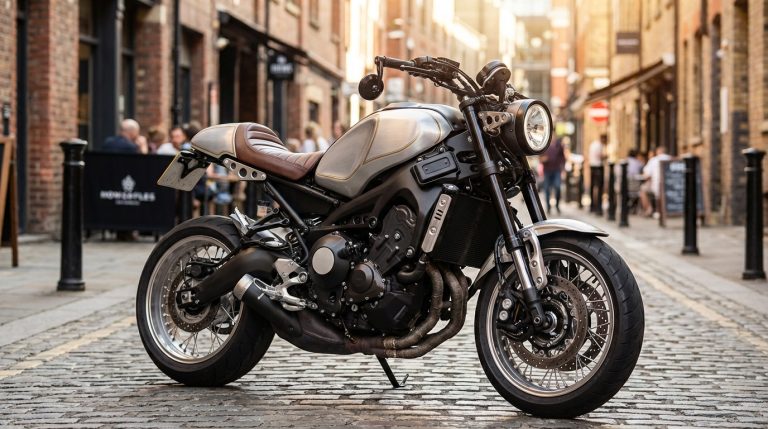
Yamaha XS650: Vintage Classic

The Yamaha XS650 embodies the very essence of the Japanese vintage motorcycle, a true classic that fascinates as much for its timeless design as for its robust mechanics. Unveiled in the late 1960s, this twin-cylinder motorcycle captivated a generation and has transcended decades thanks to its retro charm and balanced performance. Its parallel-twin engine, coupled with clean styling, has made it an icon of classic motorcycling, a preferred choice for those seeking a machine that is both reliable and authentic. It has also established itself as a favorite base for custom and restoration enthusiasts, offering a prime playground for fans of café racer culture and other classic styles. Its popularity remains undiminished, confirming the Yamaha XS650 as a cornerstone of motorcycle collections worldwide.
The 1970s marked an era where technical innovation and elegance intertwined in the world of retro motorcycles. It is in this context that Yamaha presents its XS650 model, a motorcycle that, despite its age, continues to captivate enthusiasts of classic Japanese motorcycles. Its 650cc twin-cylinder engine, the result of a technological collaboration between Yamaha and the legacy of Hosk engines, gives this machine a reliability and smooth handling that have lost none of their appeal. In 2026, the XS650 remains a symbol of the passion for vintage motorcycles, where authenticity is experienced on every ride. Compared to more recent models, it retains a special place, not only thanks to its recommended performance, but also because of its aesthetics, which lend themselves admirably to motorcycle restoration projects or transformations into XS650 café racers.
A legendary twin-cylinder engine at the heart of the Yamaha XS650
The Yamaha XS650’s twin-cylinder engine is a remarkable example of vintage Japanese engineering. Its design, primarily based on a single overhead camshaft (SOHC) architecture, is distinguished by its smooth operation and proven robustness, which have allowed it to endure for decades. This engine traces its roots back to Hosk’s initial work in the 1950s, before Yamaha adopted the entire technology to develop a 650cc engine in the early 1970s. The choice of a 360° crankshaft gives it a unique sound signature and a feel reminiscent of classic British motorcycles, although its reliability is significantly greater. This engine remains an ideal foundation for custom projects and for those seeking a motorcycle with a distinctive character.
For example, the SOHC valve train eliminates the complexity of tappets, thus reducing wear and simplifying maintenance—a significant advantage for motorcycle restoration enthusiasts. The engine design, featuring a horizontally separated crankcase to house the gearbox and engine block—an innovative feature at the time—also optimizes ease of maintenance. Furthermore, the single camshaft drive chain, coupled with high-quality bearings, ensures durability. This robust engine also appealed to American dirt track racers, such as Kenny Roberts, who exploited its potential in national competitions. Even today, this engine remains highly regarded in the classic motorcycle community, both for its performance and its distinctive character.
This engine perfectly complements the riding experience of a retro motorcycle. It offers lively performance without being harsh, appealing to enthusiasts who want a motorcycle that combines enjoyment and smoothness. Furthermore, the combination of valves operated by a single overhead camshaft and precise timing delivers consistent power of around 45 horsepower, allowing riders to fully enjoy the road while showcasing an unmistakable style. The XS650 thus stands out as a twin-cylinder engine that is reliable, pleasant, and decidedly accessible to any vintage motorcycle enthusiast.
Evolution and technical details of the Yamaha XS650 models: from 1970 to 1985
Launched in 1969, the Yamaha XS650 underwent extensive technical and stylistic evolution throughout the 1970s until its final production run in 1985. The initial series, called the XS-1, laid the foundation with a simple style and clean silhouette, ideal for classic motorcycles. This range then diversified with several successive evolutions, including the XS-1B, XS-2, TX650, XS650B, culminating in the latest generation, the XS-F, and the “Special” versions. Each iteration refined the balance between modernity and vintage aesthetics, while continuously improving quality and technical performance.
Among the major developments, it’s important to highlight the introduction of the electric starter in 1972, which greatly facilitated daily use. Regarding the brakes, technical changes were made, notably in 1977, with the switch to a floating aluminum caliper for improved braking efficiency—a key step in enhancing safety. The “Special” versions were distinguished by their teardrop-shaped fuel tank, modified swingarms, and wider tires, offering greater stability on long rides. This diversity allowed buyers to choose between a more classic model or a more assertive and sporty style.
It’s also worth noting that the front fork was revised in mid-1977, with the tube diameter increasing from 34 to 35 mm, contributing to improved rigidity and handling. Nevertheless, the motorcycle still displayed characteristics typical of vintage bikes, such as the 360° engine mounting, which created characteristic vibrations, sometimes mitigated by improved mounting points on later models. Furthermore, later versions of the “Special II” up to 1985 featured chromed plastic side covers instead of metal ones, reflecting a compromise between aesthetics and modern production.
This gradual move upmarket and the numerous technical variations allowed the Yamaha XS650 to occupy a prominent place in the catalog of classic motorcycles. Its versatility also fostered a large community around motorcycle restoration, with often easy access to parts and technical documentation. For vintage and custom motorcycle enthusiasts, this series remains a masterpiece of 1970s Japanese engineering, offering a solid foundation for customization and transformation, particularly into the XS650 café racer, a style very much in vogue today.
The essential place of the Yamaha XS650 in the retro motorcycle collection
Owning a Yamaha XS650 in 2026 means acquiring a true gem of a motorcycle collection. This classic Japanese motorcycle is a benchmark for enthusiasts of vintage models, renowned for its iconic design and reliable mechanics. Whether for a vintage motorcycle collection or for everyday use with a custom spirit, the XS650 proves to be a versatile motorcycle, capable of evoking the spirit of the 1970s while adapting to modern requirements.
The popularity of this vintage motorcycle lies partly in its relative ease of restoration. Many enthusiasts are now embarking on projects to renovate or create XS650 café racers, blending classic technology with clean, modern aesthetics. The availability of original or compatible spare parts facilitates this process. This motorcycle also remains highly sought after for classic motorcycle gatherings, where it stands out as a rare gem for several clubs and events, such as the Guzzi rallies in France mentioned in articles, which highlight the charm and authenticity of retro motorcycles.
The XS650’s success in the classic motorcycle world can also be attributed to its competitiveness against other contemporary classics. For example, compared to models like the Triumph Bonneville or the Royal Enfield Interceptor, the Yamaha XS650 offers excellent value for money, as well as highly praised handling and robustness. Its twin-cylinder engine delivers sufficient power for enjoyable road riding, while remaining pleasant to ride, even in custom conversion projects. And let’s not forget the famous XS650 café racer, which perfectly embodies the aesthetic appeal of this timeless model.
Finally, for those looking for a machine to start their journey into the world of Japanese retro motorcycles, the XS650 represents an excellent compromise between authenticity and accessibility. It’s a motorcycle worth investing in, thanks in particular to stable demand on the used market and a lasting value, reinforced by a renewed interest in vintage models on the global motorcycle scene. The enthusiasm for motorcycle restoration and custom styles continues to fuel this momentum, placing the Yamaha XS650 at the heart of motorcycle heritage.
Techniques and tips for a successful Yamaha XS650 motorcycle restoration
Restoring a Yamaha XS650 motorcycle is a process that combines passion and technical expertise. To succeed in this type of project, it’s essential to approach both the mechanical and aesthetic aspects with a rigorous method, while preserving the soul of this classic. The solid foundation provided by the twin-cylinder engine allows you to focus on refurbishing all the components without too much fear of unforeseen mechanical issues, provided you carry out a thorough diagnostic check and appropriate maintenance.
First, it is essential to thoroughly inspect the engine, checking the condition of the bearings, seals, and piston rings. The engine should be partially disassembled for deep cleaning, valve inspection, and camshaft timing adjustment. Thanks to the horizontally split crankcase design, many steps become more accessible, simplifying the work. For those who wish to optimize performance while remaining true to the original spirit, choosing high-quality compatible parts or refurbishing the Mikuni carburetors are essential steps.
From an aesthetic standpoint, restoration often involves a complete disassembly of the motorcycle, including the tank, side covers, forks, and seat. Sanding and painting the metal parts helps to erase the signs of age. The growing popularity of XS650 café racer projects encourages many to modify the exhaust system or opt for a solo seat to enhance the classic look. Other helpful tips include paying close attention to the frame welds if necessary, and choosing tires suited to the specific size, whether 110/90-18 for the standard version or 130/90-16 for the Special, which offer better stability.
Regarding the braking system, it’s essential to check the specifications of the different versions, particularly the compatibility of the calipers and front discs depending on the year. Using original parts or approved replicas ensures optimal safety. Finally, for the ignition, models after 1979 can benefit from modern electronic systems, allowing for more reliable starting and easier maintenance. All these aspects combined result in a final product that delights restorers and allows you to ride a motorcycle that remains true to the standards of classic Japanese motorcycles.
Performance, handling and comparison with contemporary classic motorcycles
The Yamaha XS650, despite its age, remains a surprising motorcycle in terms of performance and handling. Its 650cc twin-cylinder engine with a 360° crankshaft provides brisk acceleration while retaining a certain smoothness characteristic of classic motorcycles. In the riding position, this vintage motorcycle offers a balanced ride with a perfect feeling of control for navigating city streets or winding roads, making it a perfect example of a versatile retro motorcycle.
In March 1979, during a comprehensive test, the XS650 covered a quarter mile in 13.86 seconds with a top speed exceeding 150 km/h, quite respectable figures compared to other classic motorcycles of the same era. Its moderate fuel consumption, at approximately 4.58 L/100 km, also testifies to a well-designed engine, capable of striking a good balance between power and economy. This frugality, combined with proven reliability, continues to attract those who want to ride a classic motorcycle without compromise.
Compared to models like the Triumph Bonneville or the Royal Enfield Interceptor, the Yamaha XS650 stands out for its superior mechanical reliability and ease of maintenance, which explains its enduring success. Its design also allows for extensive customization, offering an infinite number of styles, such as the famous XS650 café racers that blend elegant aesthetics with performance. Thanks to technical improvements made in the later versions of the 1970s, its handling offers comfort and roadholding adapted to contemporary standards, while retaining that extra touch of charm linked to its classic nature.
For enthusiasts looking to discover or rediscover the world of vintage motorcycles, the Yamaha XS650 remains a valuable alternative in 2026, especially compared to modern motorcycles which, despite their advanced technology, don’t always convey the distinctive sound and emotion that only a classic motorcycle can offer. Motorcycle restoration projects, combined with a passion for vintage models, continue to energize the motorcycling community, perpetuating the legendary aura of the XS650.
| Year | Model | Main Features | Notable developments |
|---|---|---|---|
| 1969-1970 | XS-1 | 650cc engine, kick start | First version, original twin-cylinder engine design |
| one thousand nine hundred seventy-two | XS-2 (TX650) | Electric start introduced | Easier daily use, addition of the electric starter |
| one thousand nine hundred seventy-seven | XS-D / XS-E | Reinforced fork (35 mm), aluminum brake caliper | Improved handling and safety |
| 1978-1985 | Special Version II | Chrome-plated plastic side covers, spoked wheels | Reduced chrome parts, modernized design while retaining the vintage style |
Why choose a Yamaha XS650 for a restoration project?
The XS650 offers a robust mechanical base, a wide availability of spare parts, and a highly sought-after classic design, facilitating customization in café racer or custom style.
What is the actual power output of the XS650’s twin-cylinder engine?
The engine develops approximately 45 horsepower, offering an ideal compromise between performance and handling suited to the vintage style.
What are the main differences between the Standard model and the Special version?
The Special model features a teardrop-shaped tank, wider tires (130/90-16 vs. 110/90-18), and aesthetic details such as support arms, offering more stability and a distinctive look.
Is the Yamaha XS650 suitable for beginners?
With its smooth engine and balanced handling, the XS650 can suit novices, however a good knowledge of vintage mechanics is recommended for effective maintenance.
How does the XS650 compare to classic British motorcycles?
It offers superior reliability thanks to Japanese innovations such as the horizontal crankcase and precision bearings, while retaining the charm and sound of British twins.
To delve deeper into the passion for classic motorcycles and discover more about iconic models, it’s worthwhile to follow specialized articles such as Moto Guzzi V7 full review or to learn about modern developments, using the example of New Triumph Trident and Tiger Sport models for 2026which bring a contemporary feel while retaining strong vintage roots.